Helmeted Curassows
Pauxi spp.
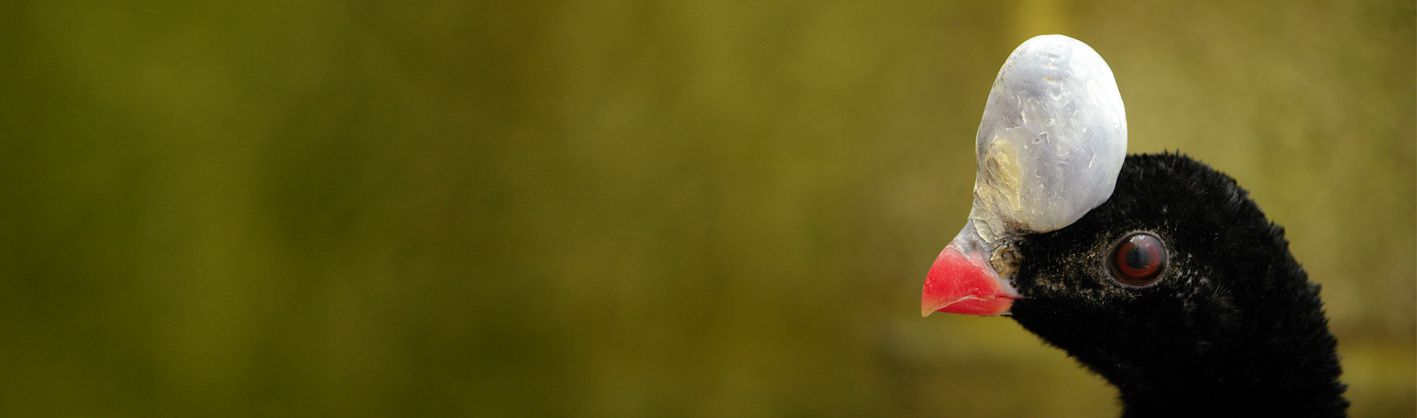
Helmeted Curassows are easily identified by their unique large blue casque which grows from the upper mandible. Unlike many species of curassow the numbers of these birds in zoos and private collections make their loss from captivity unlikely in the near to middle term. Nevertheless the population in the UK is hampered by a very low reproductive rate, inconsistent breeding results and behaviour difficulties caused by decades of artificial incubation and rearing.
Introduction
The Helmeted Curassow is an endangered cracid bird from the cloud forests and mountains of South America. They can be maintained easily in captivity by aviculturists interested in contributing to their conservation. Its unique appearance and long lifespan has ensured a sizable population is kept in captivity at various public and private collections throughout Europe.
General Care
Maintaining these birds is straightforward and they present very few problems for the experienced aviculturist. They are not demanding in terms of diet and will thrive on a formulated pheasant pellet with fruit. A large aviary is required with plenty of perches. As with all galliformes blocking one side of the aviary or providing thick planting will help the birds feel more secure. Bamboo species such as Pseudosasa japonica and Fargesia murielae work well for this purpose and will not be damaged by the birds when established.
In climates that require it the most important consideration is the provision of good sized indoor accommodation where they can be shut in during very cold weather. Although they tolerate cool conditions well they are prone to frostbite. Using a tubular heater in their indoor accomodation easily avoids problems.
This species must be handled with care. Males have a long tracheal loop which must not be blocked during handling. When panicked they fly powerfully upwards and can easily damage their helmet. Damage to the skin on the helmet takes a considerable time to heal and in the worst cases this can lead to permanent deformity. Other health issues are minimal, I worm my birds each year after the breeding season. The gender of birds can be determined by an experienced handler inverting the cloaca in the same way as waterfowl.
Breeding
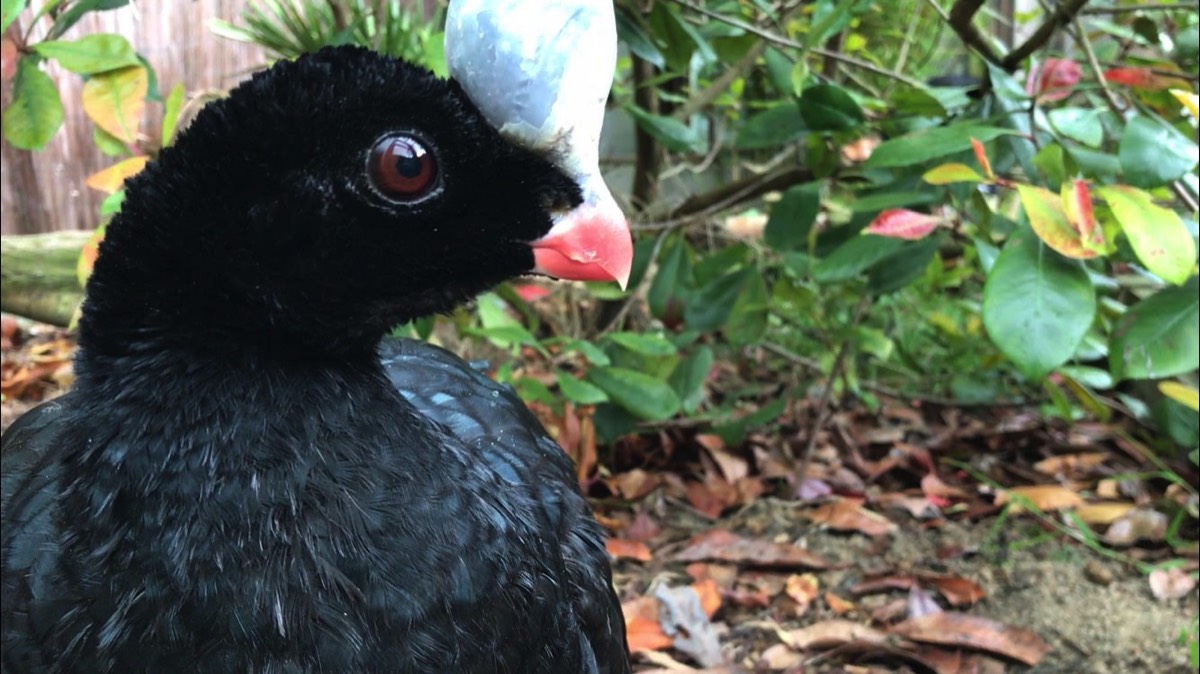
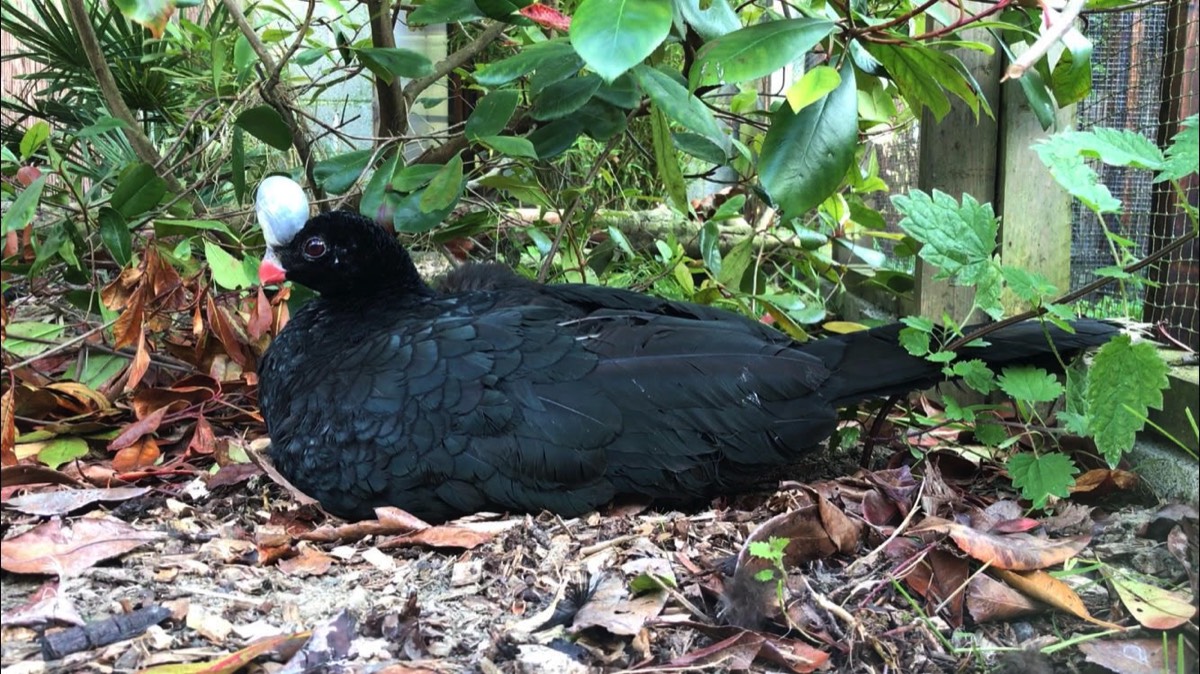
Helmeted curassows are monogamous and should be kept in pairs in preparation for breeding in spring. Most initial introductions during autumn go well and pairs generally remain compatible. Females should be monitored carefully over winter as their partners can treat them roughly and this may require a temporary separation. Courtship feeding, when the male offers food to the female, is a positive sign of compatibility which increases in frequency during February. At this time my birds are given access to increased amounts of oyster shell grit.
Curassows will use a variety of different nest sites and nest building first occurs during the month of March. I provide a woven basket filled with straw at perch height. Male helmeted curassows select a nest site by rearranging material and forming a depression in the straw. During this process they vocalise to communicate the choice to the female. This behaviour is essential for parent rearing, if the male does not behave correctly the breeding attempt will fail and the female will lay from the perch.
Once a suitable nest is established the female will lay a clutch of two large eggs 48 hours apart,this occurs in late April. Females start incubation immediately after the second egg is laid. Dependent upon the temperament of the male he may need to be removed at this stage to prevent disturbance. Helmeted Curassows incubate for one month and females can spend up to two hours off the nest each day, especially in warm weather. This shouldn't be seen as an indication of problems. The resulting chicks are large and hatch rapidly.
For the first two weeks I keep the family indoors so I can better control the conditions. Brooding of new chicks is important, a good start can make the chicks stronger and much easier to rear. Females are quick to move their new family out of the nest and onto the floor within 24 hours of the last chick hatching. The hen will spend at least the first night on the floor brooding the chicks and up to six further nights. The chicks are reared on a diet of pheasant starter crumb provided in a dish. The female will show the chicks the food and encourage them to eat by vocalising.
In the event of problems or a female which refuses to brood the chicks adequately, the young birds can be removed to an artificial brooder overnight and reintroduced to the female the next morning.
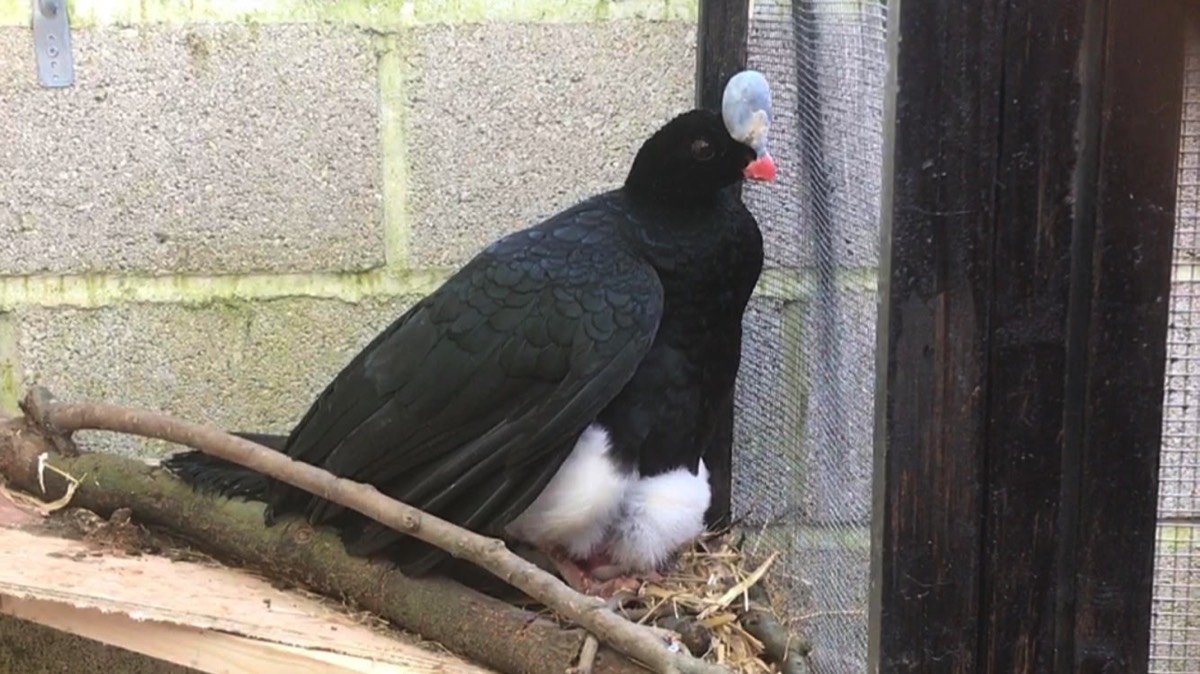
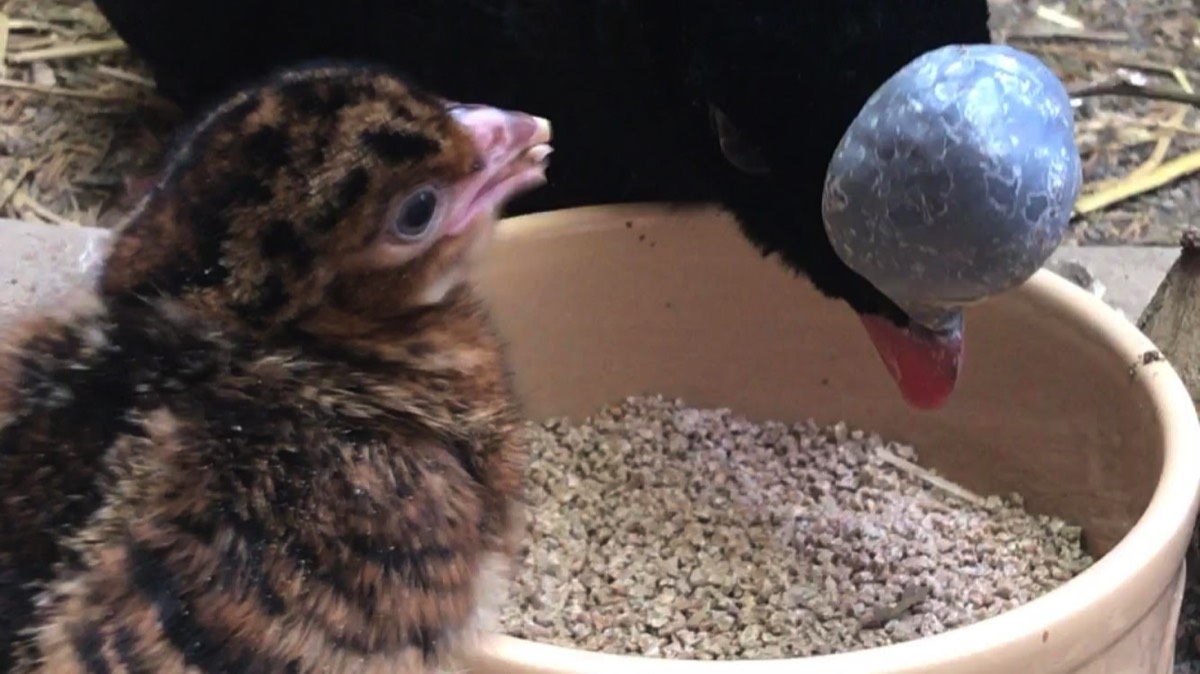
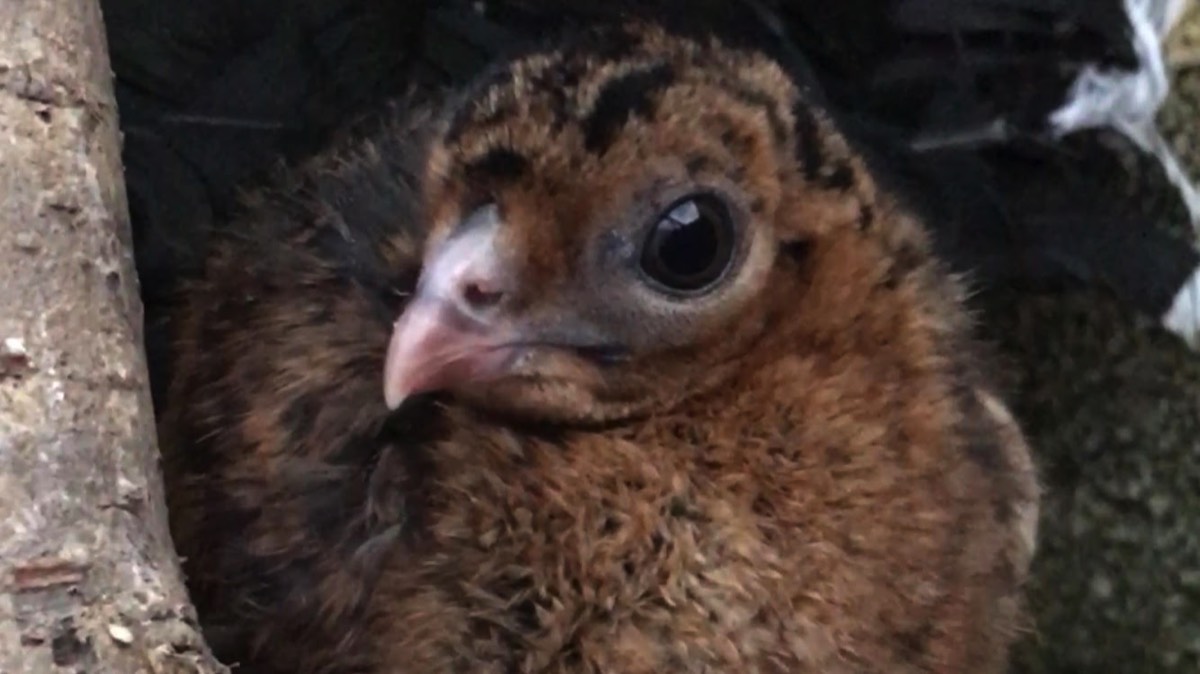
Once the female decides to roost the chicks will attempt to follow her and a ladder must be provided to allow them to access the same perches as their mother. Some females return to the nest and continue to use it while rearing the chicks. Chicks may be unsuccessful in following their mother, in this case they roost independently away from the female. I provide branches nearer the floor. This generally does not cause a problem as the chicks are well insulated and thermoregulate quite effectively, nevertheless I monitor temperature closely.
Chicks grow quickly and rapidly develop feathers. As they get stronger and more coordinated they are allowed outside, generally not before two weeks old. The outdoor aviary needs to be checked carefully to ensure it is as safe as possible for the chicks which should be confined to the indoors with the females during poor weather and at night. At the age of one month they are generally independent and require less keeper intervention. The young birds are tolerated well by adults until the following breeding season, I remove them in Autumn. The helmet develops slowly, increasing in size until the bird reaches maturity at two years old.
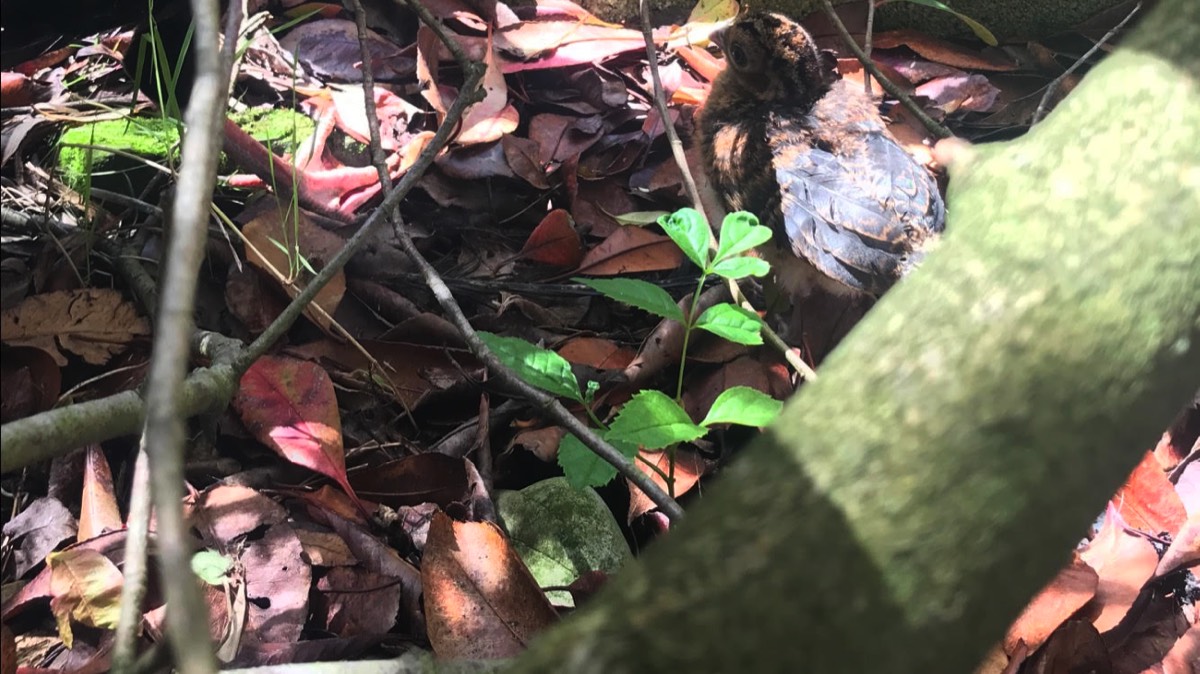
In conclusion artificial rearing can produce more offspring overall however allowing these birds to raise their own young and encouraging natural behaviour provides the ultimate form of behavioural enrichment while improving the captive population for the future. I hope that other keepers will be able to use the information above to make their own successful attempts.